calimoto Motorcycle Navigation
- 4.2
- Rating
- 1.00M
- Installs
- Free
- Price

 Analysis by App-foxy
For riders, navigation is not just about reaching an address. The useful route is often the one with better bends, quieter roads, and enough flexibility to turn a short trip into a proper ride. That is the space where calimoto tries to be more useful than a standard car-focused map. I reviewed it as a motorcycle navigation app, route planner, and ride tracker, and my overall impression is that it makes route discovery feel much more deliberate than simply entering a destination and accepting the fastest option.
The app is free to install, aimed at everyone from a content-rating perspective, and developed by calimoto GmbH. It has built a sizeable audience, with over one million installs and an average rating of 4.2 from around fifty-one thousand ratings. Those figures suggest a mature product with plenty of real-world use behind it, although they do not remove the need to check whether its riding style matches yours.
A motorcycle-first approach to getting somewhere
My first reaction is that this is not merely a familiar map application with a motorcycle icon added to the transport menu. Its purpose is clearer: help riders plan the journey itself. That distinction matters when the destination is secondary and the road is the main attraction.
You May Also Like

 Blood Strike: 2.5 Anniversary
Blood Strike’s Loadouts Turn Every Drop Into a Tactical Gamble
A close look at Blood Strike’s custom loadouts: how fast access to signature weapons reshapes its battle royale rhythm, rewards preparation, and narrows the gap between fights.

 Pandora - Music & Podcasts
Pandora’s Music Is Easy to Start, but Harder to Recover
Pandora’s strength is its low-effort path from a seed to a station. Its weak spot is how much confidence it asks you to place in connection, setup, and quiet recovery.

 8 Ball Pool
 Is Built on Rivalries, Rematches, and Routine
A close look at the rivalries, rematches, shared routines, and unanswered safety questions that turn a quick pool match into a persistent mobile community.

 Samsung Music
’s Quiet Strength Is Playing What You Already Own
Its reach comes less from spectacle than from dependable access to a personal library. That simplicity is both the app’s strongest retention engine and its ceiling.

 AccuWeather: Weather Radar
AccuWeather Review: A Quick, Clear Forecast for Everyday Decisions
For everyday plans, the best forecast is the one you can understand quickly. AccuWeather makes rain timing, radar, and local conditions easy to act on, with a few trade-offs.

 Hill Climb Racing
Why Hill Climb Racing Still Turns Crashes Into One More Run
A tiny car, a bumpy hill and one more upgrade: Hill Climb Racing keeps resurfacing because its simple chaos makes every near-miss feel personal.
More From Our News Desk



A normal navigation app is excellent when I need the quickest route to work, a shop, or an unfamiliar address. It usually prioritizes efficiency. calimoto is more interesting when I want to avoid a dull motorway, add curves to a weekend loop, or build a route that still makes sense after the destination becomes an excuse rather than the objective.
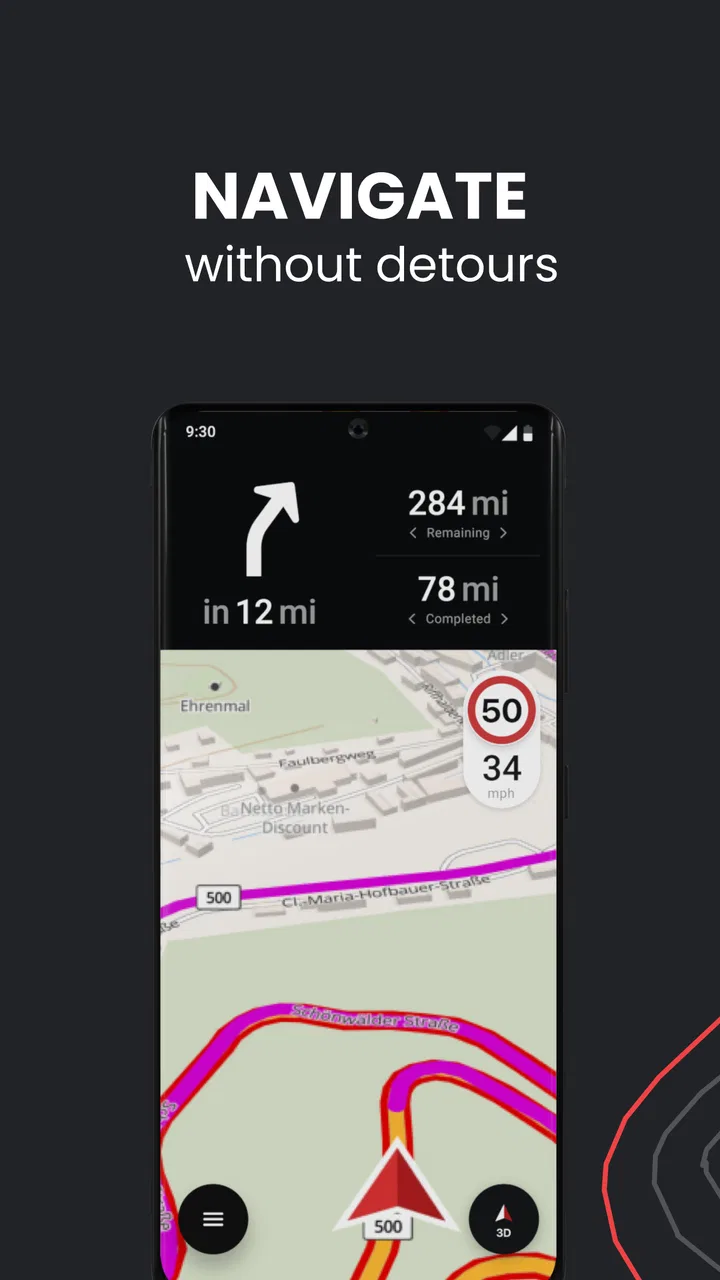
The combination of navigation, route planning, and ride tracking gives the app several roles. I can use it before leaving to shape a trip, during the ride to follow it, and afterward to keep a record of where I went. That makes it more suitable for planned leisure riding than a basic directions tool.
There is also a practical benefit to having these jobs in one place. Switching between a route-planning service, a navigation app, and a separate tracker can create small but annoying gaps. A route may not transfer cleanly, preferences can be lost, and the final ride may not resemble the original plan. Keeping the workflow together is one of calimoto’s strongest ideas.
Planning a route instead of accepting one
The best way to approach the app is to treat it as a planning instrument rather than a passive voice in a phone mount. Before a ride, I would decide what the trip is meant to be: a quick connection between two places, a scenic loop, or a route where the bends matter more than arriving early. That decision should guide how much time I spend refining the plan.
A useful workflow is to begin with the broad shape of the journey, then inspect the roads rather than immediately adding dozens of points. Too many manual instructions can make a route fragile and tedious to edit. I prefer to establish the start, destination, and general direction first, then adjust only the sections that do not fit the ride I want.
That approach also exposes an important trade-off. A more entertaining route is rarely the most predictable one. It may take longer, pass through less familiar areas, and offer fewer convenient stopping points than the direct alternative. calimoto can help me choose the character of a journey, but it cannot turn a winding road into a risk-free road or guarantee that every attractive section will suit current traffic and weather.
For a rider who enjoys discovering roads, the planner is likely to feel more rewarding than the usual “fastest route” button. For someone who mainly wants dependable door-to-door directions with minimal decisions, the extra planning focus may feel unnecessary.
An everyday scenario where it makes sense
Imagine leaving after work with two hours available and no fixed destination beyond being home before dark. With a conventional map, I might search for a nearby place and then follow the quickest route. With calimoto, I would create a loop, favor roads that make the ride enjoyable, and keep the return leg practical enough that the trip does not become stressful when time runs short.
The same idea works for a weekend ride with friends. I can prepare the route before meeting them instead of making decisions at every junction. If the group wants to stop, shorten the ride, or skip a section, the plan remains a starting point rather than a commitment. That is where the app feels genuinely helpful: it reduces the mental work of composing a ride without pretending that a planned line should override real conditions.
One tip I would give new users is to plan with an exit strategy. If the route includes a long remote section or several enjoyable detours, identify a simple way back toward a major road before setting off. This is not a special feature claim; it is simply a better way to use a tool that encourages exploration.
Offline use changes the preparation routine
The ability to use navigation offline is especially relevant to motorcyclists. Rural riding can take me through areas where coverage is inconsistent, and relying on a live connection throughout a trip is not a comfortable habit. Offline capability means preparation matters more: I need to think about what I will need before leaving, rather than assuming the phone can fetch everything at the roadside.
I would download or prepare the necessary route while connected, then check that the phone has enough battery and that the device is mounted where I can use it safely. Offline navigation is not a substitute for common sense. A road closure, temporary restriction, or sudden change may not be reflected in a previously prepared route, so I would still treat signs and local conditions as more authoritative than the screen.
This is one of the less obvious trade-offs of offline planning. It reduces dependence on a signal, but it increases responsibility before departure. Riders who regularly travel through poor-coverage areas will probably appreciate that exchange. Riders who only commute through well-connected urban areas may notice little difference.
Trust, controls, and the moments that deserve attention
Because a navigation app can accompany me for an entire ride, I judge it not only by route quality but also by how clearly I can control my use of it. The important question is not whether an app feels polished in a store listing. It is whether I can make sensible choices about accounts, purchases, tracking, and when the app should be active.
calimoto is free to start, but it includes in-app purchases ranging from $1.49 to $319.99 per item. That wide range is a reason to slow down before confirming anything. I would review the exact offer, duration, and renewal terms shown on the purchase screen rather than assuming that every useful planning option is included in the free experience.
The free entry point is welcome, particularly for someone who wants to test the basic workflow before committing money. At the same time, a rider should not plan an important trip around an option they have not already checked. Trying the app on a familiar local ride is a much safer way to understand what is available than discovering a limitation on a remote weekend journey.
Account control deserves the same practical attention. If I create an account, I want to know which features depend on being signed in, how my routes and tracked rides are associated with that account, and what remains usable when I am offline. I would look for those choices inside the app and its account settings before building a large personal library of routes.
Data-sensitive moments during a ride
Tracking a ride can be useful, but it also creates a record of movement. That record may reveal where I live, where I work, which roads I frequent, or when I tend to ride. I would therefore treat tracking as a deliberate action, not something to leave running by habit.
My own routine would be simple: start tracking only when the ride begins, stop it when the ride ends, and review the saved result before sharing or storing it. I would avoid recording sensitive journeys unnecessarily, especially trips that begin or finish at a private address. If a route is only needed for navigation, there is no obvious reason to create a lasting ride history as well.
This is also where a motorcycle app differs from an ordinary map used for occasional directions. The journey is often the content. That makes route history more valuable, but it also makes the consequences of careless sharing more personal. A memorable loop can be worth saving; a complete pattern of daily movements may not be.
I would also check whether the app offers visible controls for account data, saved routes, tracked rides, and sharing before relying on it as a long-term archive. The important standard is clarity: I should be able to understand what I am saving and make a choice without hunting through obscure menus.
Phone permissions and safe user choices
Navigation normally needs location access to guide me, and tracking naturally depends on location while a ride is underway. I would grant only the access needed for the way I intend to use the app, then revisit the phone’s permission settings if my usage changes. A rider who plans routes at home may not need the same active access as someone who wants continuous guidance and tracking.
I would not make permission decisions while moving. Before riding, I would set the display, sound, location access, and battery behavior, then keep the phone secured in its mount. A navigation app can be technically capable and still become a distraction if I am repeatedly tapping the screen to correct a route.
Battery use is another practical concern. Long navigation sessions, a bright display, location services, and poor signal conditions can all reduce endurance. I would begin with a charged phone and carry a reliable charging solution for longer rides. That advice applies particularly to calimoto because its intended use often involves extended journeys rather than a short walk across town.
Voice guidance, when suitable for my setup, is preferable to frequent visual checks. However, I would still verify complicated junctions only when it is safe to do so. A motorcycle route planner should support attention on the road, not compete with it.
What I would compare before choosing it
Compared with Google Maps or Apple Maps, calimoto is more appealing when I care about the ride between two points. The mainstream alternatives are usually better for businesses, addresses, public places, traffic context, and everyday errands. They are familiar, quick, and often already installed, which makes them hard to beat for ordinary transport.
Compared with a dedicated motorcycle navigation device, the phone-based approach can be more accessible and easier to update through the app. The compromise is that the phone, mount, charging arrangement, weather protection, and screen visibility all become part of the navigation system. A dedicated unit may remain preferable for riders who spend much of the year touring and want a purpose-built device.
Compared with a simple route tracker, calimoto offers a broader workflow because planning and navigation sit alongside recording. A tracker may be the better choice for someone who only wants a quiet log of distance and location without actively shaping routes. The right option depends on whether I want the app to help design the ride or merely document it.
Where the experience can become frustrating
The app’s motorcycle focus is also its main limitation. If I only need the fastest practical route, the specialized planning layer may add decisions without adding value. A rider commuting through a city every day may prefer the speed and broad place information of a general map service.
Winding routes can also be unsuitable in real conditions. Heavy rain, fading daylight, road works, fatigue, or a passenger who feels unwell can turn an enjoyable detour into a poor choice. I would be willing to abandon a carefully prepared route immediately when conditions change. The app should suggest a journey, not pressure me to complete it.
There is a learning curve as well. The more control a route planner gives me, the more time I need to understand how its choices affect the final ride. I would not judge it after a single quick trip. I would test it first on roads I already know, compare the planned route with what I actually want, and only then use it for unfamiliar travel.
The purchase structure may be another source of hesitation. Since optional items can reach a high price, I would read each offer carefully and consider whether I need it for my riding pattern. Someone who rides occasionally should be especially cautious about paying for capabilities they will rarely use.
Who should use it, and who should skip it
I think calimoto is a strong candidate for riders who see route choice as part of the fun. It suits weekend explorers, people who enjoy building loops, and motorcyclists who want offline preparation for trips away from reliable coverage. It is also useful for riders who like reviewing where they have been after a journey rather than relying on memory.
I would be less enthusiastic about recommending it to someone who wants the least complicated commute possible. If the priority is live traffic, business search, public transport, or quick address lookup, a mainstream map may be more convenient. I would also suggest caution for riders who dislike account-based services, do not want to manage tracking choices, or prefer a dedicated navigation device with fewer phone-related variables.
New users should begin with a familiar route, prepare offline access before leaving, check the purchase screen rather than guessing what is included, and decide in advance whether tracking is actually needed. Those four habits answer most of the practical questions that arise after installation: whether the app fits a daily ride, whether it can help away from coverage, whether the cost structure is acceptable, and whether personal route history is being created intentionally.
In my experience, the app is at its best when I use it as a thoughtful co-pilot for planning rather than an unquestionable authority. I still check fuel, weather, daylight, road signs, and my own energy. That attitude makes the route suggestions more valuable because I remain responsible for the final decision.
My cautious verdict is that calimoto earns a place on a motorcyclist’s phone when the journey matters as much as the destination. Its free starting point, motorcycle-oriented planning, ride tracking, and offline use form a coherent package, and the current version, 2026.02.2, shows that it remains actively maintained as a product. Its 4.2 average reflects a generally positive reception, but I would not recommend installing it blindly for every type of rider.
I would try it on local roads first, keep personal data and tracking under conscious control, and treat optional purchases as decisions rather than assumptions. If I wanted scenic route discovery and a more intentional riding workflow, I would recommend giving it a fair test. If I wanted only fast everyday directions or a completely separate navigation device, I would choose the simpler alternative instead.
FAQs for calimoto Motorcycle Navigation
01What features does calimoto offer for motorcycle navigation?
Calimoto provides turn-by-turn navigation specifically tailored for motorcyclists. It includes features like route planning with scenic options, offline maps, and personalized trip tracking. Additionally, it offers weather updates and the ability to share routes with friends. These features make it a comprehensive tool for motorcycle enthusiasts seeking adventure.
02Can I use calimoto offline, and how does that work?
Yes, calimoto allows offline usage by downloading maps to your device beforehand. This is particularly useful in areas with poor cellular coverage. To use offline maps, simply download the desired region's maps within the app, ensuring that you have access to navigation without an internet connection.
03How does calimoto ensure the safety of its users during rides?
Calimoto prioritizes user safety by offering features such as route planning with safety in mind, real-time weather updates, and hazard alerts. Additionally, the app allows riders to share their location with friends or family, providing peace of mind during long journeys and ensuring help is accessible if needed.
04Is calimoto customizable for different riding preferences?
Absolutely, calimoto offers extensive customization options. Riders can choose routes based on their preferred level of twistiness, distance, and scenic views. The app also allows users to save favorite routes and create custom tours, making it adaptable to various riding styles and preferences.
05What are the costs associated with using calimoto?
Calimoto offers both free and premium versions. The free version provides basic navigation and planning features, while the premium subscription unlocks additional features such as unlimited offline maps, advanced route planning, and more detailed trip statistics. Subscriptions are available on a monthly or yearly basis.
Pros
- User-friendly interface for easy navigation
- Comprehensive route planning features
- Community-driven route sharing
- Offline maps for remote areas
- Real-time weather updates
Cons
- Limited customization for route preferences
- Battery drain on extended use
- Subscription required for some features
- Occasional GPS inaccuracies
- Interface can be cluttered for beginners

calimoto Motorcycle Navigation
Gallery